
Planning
6 June 2026
Getting Legally Married in Cyprus: A Guide for Foreign Couples
A calm, high-level guide to how a legally binding civil marriage in Cyprus works for foreign couples — the process, documents, ceremony types and how we help.
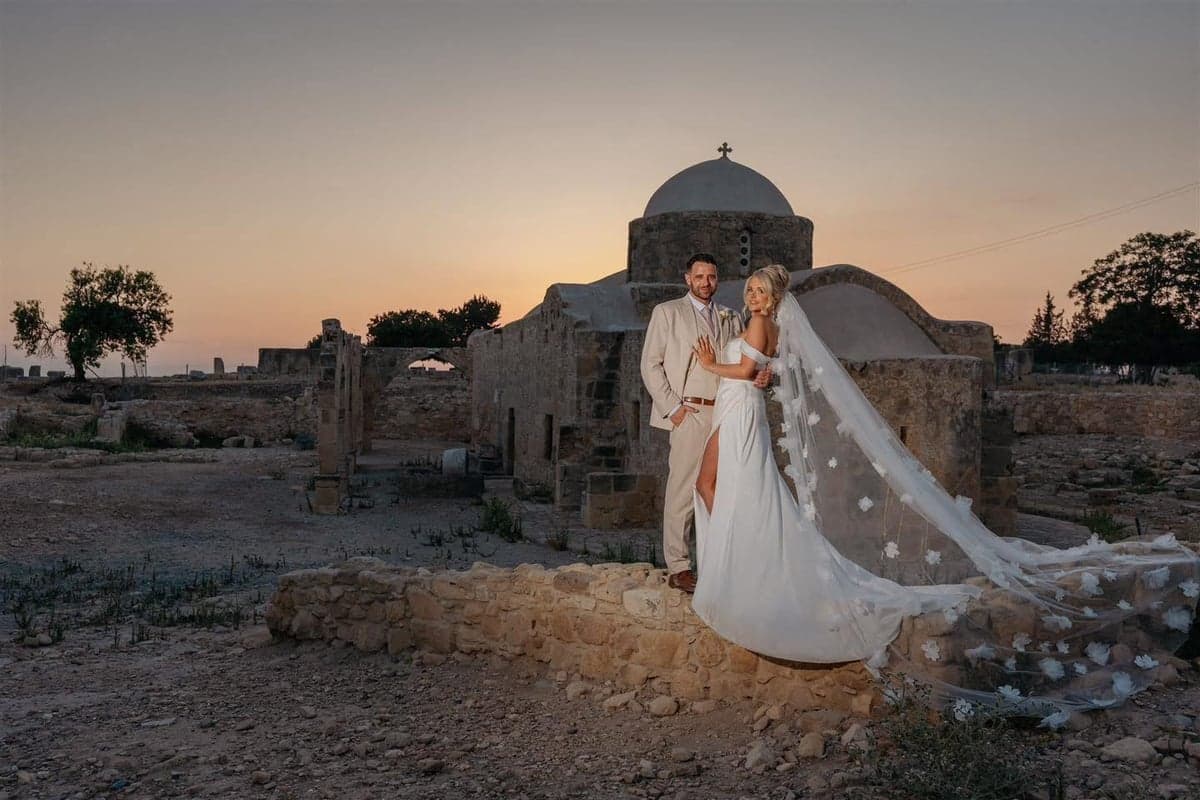
Of all the places to marry abroad, Cyprus is one of the most reassuring. The island has welcomed foreign couples for decades, the civil process is well established, and most of it is conducted in English. If you are coming from the UK – or anywhere else – a legally binding wedding here is very achievable, and rather more straightforward than in many other Mediterranean destinations.
This guide explains, at a high level, how a legal civil marriage in Cyprus actually works: who arranges it, the general shape of the process, the documents couples are usually asked to provide, and how civil, religious and symbolic ceremonies differ. One important note before we begin: legal requirements, fees and notice periods do change over time and can vary from one municipality to another, so please treat everything below as a guide to the shape of the process rather than a fixed checklist. Always confirm current requirements with Marry Me Cyprus or the relevant municipality before you commit to dates and travel.
Who actually marries you in Cyprus
A legally binding civil marriage in Cyprus is arranged through a local municipality and conducted by a Marriage Officer. There is no single national wedding office you visit; instead, each town hall handles its own marriages. This is why details such as fees, available appointment times and exact paperwork can differ depending on where you choose to marry – Paphos, Limassol, Larnaca, Ayia Napa or elsewhere.
For most foreign couples, the practical answer is that you do not navigate the municipality alone. A planner liaises with the relevant town hall on your behalf, helps you assemble the right documents, books your slot and makes sure nothing is missing on the day. That is precisely what our Legal Assistance service (from €169) is designed to do.
The general shape of the process
While the specifics vary, the overall journey tends to follow a familiar pattern.
- You and your planner agree a wedding date and the municipality you would like to marry in.
- You gather the documents the municipality asks for and arrange any official translations or apostille certification where required.
- You give notice of marriage to the Marriage Officer – typically both partners attend in person in Cyprus to do this, and we confirm the exact requirement for your municipality.
- After the required notice has been observed, the civil ceremony takes place and you receive your marriage certificate.
There is typically a standard route and a faster or express option, the latter allowing the notice period to be shortened where the municipality permits it. The exact notice periods, costs and conditions attached to each route can vary by municipality and over time, so we will always confirm the current position for your chosen town before you plan around it.
The documents couples are typically asked for
Again, this is a guide to what is commonly requested rather than a guaranteed list, and a municipality may ask for more or less depending on your circumstances. Couples are typically asked for:
- Valid passports for both partners.
- Full birth certificates.
- Where one or both partners have been married before, a decree absolute (or equivalent final divorce document).
- Where a former spouse has died, that spouse's death certificate.
- In some cases, a recent certificate of marital or civil status, and witnesses on the day.
Some documents may need to carry an apostille and, where they are not already in English or Greek, an official translation. Requirements around certification and translation are exactly the sort of detail that changes, so confirming current rules early is genuinely worthwhile – it is far easier to sort an apostille at home in advance than to discover a gap after you have arrived.
Where the ceremony can happen
The legal ceremony itself can sometimes take place at a licensed venue, which lets the moment you sign the register sit beautifully within your wider celebration. Where that is not available, the legal element is conducted at the municipality, and many couples then hold a separate symbolic celebration on a beach or at their chosen venue – the part with the guests, the vows, the readings and the setting they fell in love with. Whether your venue is licensed for the legal ceremony is something we confirm as part of planning, because it shapes how your day is structured.
Civil, religious and symbolic ceremonies
It helps to understand the three different things a "ceremony" can mean here.
- A civil marriage is the legally binding option for foreign couples, arranged through the municipality and conducted by a Marriage Officer as described above. This is what makes your marriage legal.
- A religious ceremony follows the rules of the relevant faith and church, which have their own separate requirements. These vary considerably by denomination and are arranged independently of the civil process.
- A symbolic ceremony carries no legal weight. It is the celebration itself – often on a beach or at a venue – where you exchange vows in front of your guests. Many couples complete the brief legal formalities quietly and then pour their energy into a symbolic celebration designed entirely around them. Our symbolic and vow-renewal ceremonies start from €750.
A common and stress-free approach is to handle the legal marriage as its own small, calm appointment, and to treat the celebration as the main event. That way the paperwork never overshadows the day you actually remember.
Who can marry in Cyprus
Cyprus welcomes foreign couples from all over the world. Different-sex couples can marry through the civil process described above. For same-sex couples the position is different: Cyprus introduced civil partnerships (also called civil unions) in 2015, which give couples legal recognition, while full same-sex civil marriage is a separate and evolving area of law. Because the available options and their recognition can change, same-sex couples should confirm their exact position with us or the relevant authority before booking dates and travel. As with any couple, the precise documents and steps also depend on individual circumstances – for example whether either partner has been married before.
How Marry Me Cyprus helps
We have been planning weddings from Paphos since 2009, with more than 1,500 weddings delivered across the island, and the legal side is something we handle constantly. Our Legal Assistance service takes the administrative weight off you: we confirm the current requirements for your chosen municipality, guide you on documents, translations and certification, liaise with the Marriage Officer, and make sure your notice and ceremony are correctly arranged.
If you would like us to look after the whole day as well as the legalities, we offer everything from day-of management through to complete wedding planning, and we plan island-wide – from Paphos in the west to Ayia Napa and the east coast. Whichever route you choose, the aim is the same: a legal marriage that is correct and calm, and a celebration that feels entirely yours.
A reassuring note to finish on
Marrying in Cyprus is one of the more straightforward legal processes in the Mediterranean, but it is not something to improvise. Because requirements, fees and notice periods can change and vary by municipality, the single most useful thing you can do is talk to us, or to the relevant municipality, early – so that what you read here becomes a confirmed, current plan tailored to you. We are very happy to walk you through exactly what your circumstances require.
Frequently Asked
Is a civil marriage in Cyprus legally recognised in the UK?
A civil marriage conducted by a Cyprus municipality Marriage Officer is a legally binding marriage. Many foreign couples, including those from the UK, marry in Cyprus each year. Because recognition and document requirements depend on your individual circumstances and can change, you should confirm the current position with Marry Me Cyprus or the relevant municipality before you travel.
What documents do I need to get married in Cyprus?
Couples are typically asked for valid passports and full birth certificates, plus a decree absolute if previously divorced, or a former spouse's death certificate where relevant. Some documents may need an apostille and an official translation. The exact list can vary by municipality and over time, so always confirm your specific requirements before finalising plans.
Where does the legal ceremony take place in Cyprus?
The legal civil ceremony can sometimes be held at a licensed venue, or otherwise at the municipality. Many couples complete the legal formalities and then hold a separate symbolic celebration on a beach or at a venue with their guests. Whether a particular venue is licensed for the legal ceremony is something we confirm as part of planning.
Can same-sex couples get married in Cyprus?
Cyprus introduced civil partnerships (also called civil unions) for same-sex couples in 2015, giving legal recognition, while full same-sex civil marriage is a separate and evolving area of law. The available options and their recognition can change, so same-sex couples should confirm their exact position with Marry Me Cyprus or the relevant authority before booking dates and travel.
What is the difference between a civil, religious and symbolic ceremony in Cyprus?
A civil marriage is the legally binding option for foreign couples, arranged through the municipality. A religious ceremony follows the rules of the relevant faith and is arranged separately with its own requirements. A symbolic ceremony carries no legal weight and is the celebration itself, often on a beach or at a venue, where you exchange vows in front of guests.